
"Bolivia coffee"
1000 article(s) found
Bolivian coffee transportation difficulties limit the speed of its coffee development boutique coffee
Professional coffee knowledge exchange more coffee bean information please pay attention to the coffee workshop (Wechat official account cafe_style) Bolivia (Bolivia) Bolivian coffee, due to transportation difficulties limit the speed of development of its coffee, but the quality is not poor, Bolivian beans, are of good quality, with obvious fruit tone, sometimes with floral flavor.

A brief introduction to the treatment method of grinding degree and baking degree of fine coffee beans in rich and balanced Xuemai Manor
Bolivia is not a big coffee producer, but the excellent altitude and climatic conditions of the La Paz Mountains make the coffee produced here is of excellent quality. Bolivian boutique coffee is delicate, bright, sweet and fragrant. It is a typical coffee that makes people feel clean and relaxed. The coffee here has subtle fruity aromas such as pears, apples, apricots, oranges and lemons. Malt and chocolate on the palate

Introduction of Coffee Variety and Flavor in Copacabana producing area of Bolivia
For more information on coffee beans, please follow the Coffee Workshop (Wechat official account cafe_style) Bolivia is a landlocked country in South America and the center of the ancient Inca empire. It is also one of the few countries in South America where the local language is still widely used. From the peaks of the Andes to the vast saline plains, Bolivia has diversity
South American coffee bean beads-characteristics of Bolivian coffee beans creamy sticky taste and sweetness
Professional coffee knowledge exchange more coffee bean information please follow the coffee workshop (Wechat official account cafe_style) front street-Bolivian coffee introduction Bolivia's coffee production is mainly small farmer production system, the country has 23000 small farms with a size of 2-9 hectares, and in particular, about 40% of Bolivia's coffee culture is mainly domestic.

Rich and unique Bolivian fine coffee bean flavor taste aroma characteristics Description Introduction
Because Bolivia produces so little, we don't have much chance of drinking it. Because the smaller the yield, the more precious it is. For my personal preference for Central American coffee, I still have more expectations for Bolivia, a small and beautiful coffee-producing country. In the past, Bolivia's coffee was mostly of average quality, but in recent years, fine coffee production has developed rapidly and a lot has appeared.

A brief introduction to the market price of Bolivian boutique coffee beans with dried almonds
Bolivia not only has a unique growing environment, but also has an excellent coffee variety Typica. In the past two hundred years, the main variety of coffee in Yanggas area is the ancient Tibica. Tibica coffee has a balanced and soft flavor, with lively aroma and rich sour taste. Unfortunately, the low production of Tibika and its poor disease resistance make Bolivia's

Aroma rich and unique Bolivian coffee grind characteristics Taste flavor description Variety introduction
In 1863, a rich deposit of saltpeter was discovered in Atacama province on the Pacific coast. In 1879 Chile sent troops to occupy Kuangqu, Bolivia and Peru united, and Chile fought the Pacific War. Bolivia lost its defeat in 1883, ceded the Pacific coast rich in saltpeter to Chile in 1904, and Bolivia lost its only coastal province, including the important port of Antofagasta, from

Single bean flavor characteristics, producing areas and cooking parameters of Snow vein Manor in Bolivia
Professional barista exchanges please pay attention to the coffee workshop (Wechat official account cafe_style) Bolivia Snow vein Manor single bean flavor characteristics, production areas and brewing parameters Takesi Manor, drinking water and coffee after harvest treatment, using alpine melting cold snow landscape, so we give her a nickname: Takesi Snow vein Manor; except for low temperature, pollution-free environment

High-grade vanilla sweet Bolivian boutique coffee beans cultivation geographical location climate altitude brief introduction
Bolivia not only has a unique growing environment, but also has an excellent coffee variety Typica. In the past two hundred years, the main variety of coffee in Yanggas area is the ancient Tibica. Tibica coffee has a balanced and soft flavor, with lively aroma and rich sour taste. Unfortunately, the low production of Tibika and its poor disease resistance make Bolivia's

Introduction to the characteristics of high-quality coffee beans with smooth texture in Bolivian coffee producing areas
The legal capital, the seat of the Supreme Court, with a population of 284000, 2790 meters above sea level. Founded in 1538, the city was formerly known as Chuquisaka. The city witnessed the first uprising in South America against Spanish rule in 1809. Bolivia declared its independence here in 1825 and became the capital in 1826. In 1839, it was renamed Sucre to commemorate the second president of Bolivia, General Antonio Jos é Sucre.

Bolivia Snow vein Manor Coffee Manor introduces Yongas, northeast of La Paz.
The first extraordinary Cup was held in Bolivia in 2004. A total of 13 boutique bean cups scored more than 84. Be selected into the gold list. The top three are all from Karanawi. Champion Dou scored as high as 90.44. The European and American jury was astonished. It is called the boutique coffee of Bolivia. It is as mellow as honey jade. The results of the 2009 Boro extraordinary Cup are even more eye-catching. It has a total score of more than 84 for 30 boutiques.
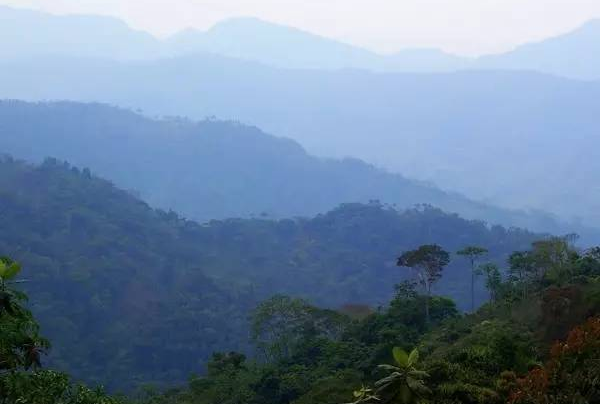
Description of taste and flavor of coffee beans for solitary travelers in Dark Arts, Bolivia
Follow the caf é (Wechat official account vdailycom) found that the Beautiful Cafe opened its own small shop in Bolivia Suapi comes from the La Paz producing area. Outside the city of Caranavi, coffee cherries are processed on a small farm, peeled and peeled mechanically, fermented in a small fermentation tank overnight, and then washed after fermentation.

Description of Variety and Flavor in Bolivian Coffee production area introduction of Grinding degree and Baking degree
Flavor: dry aroma of roasted nuts and almonds. Lake Titicaca of orange and pomelo is located on the Coya'ao Plateau on the border of Bolivia and Peru. It is the highest and largest freshwater lake in South America. It is also one of the highest freshwater lakes in the world. It is also the highest navigable lake for ships in the world. It is the third largest lake in South America to wash Bolivia with a cup of water.

Bolivia new Justa cooperative information introduction washing iron card species is very sweet!
For the exchange of professional baristas, please follow the coffee workshop (Wechat official account cafe_style) Bolivia Finca Nueva Llusta brief description 2017, Bolivia, the new Eusta cooperative tin card species! The new Justa Cooperative of Bolivia is located in San Lorenzo High altitude Valley (San Lorenzo). The achievement of the Excellence Cup in 2005 not only made the small farmers in the area famous, but also laid the foundation.

Lake Titicaca Single-Grown Coffee Bolivia Koppa Cabana Smallholder Boutique Coffee
Flavor: Dry aromas of roasted nuts and almonds, soft fruit acids of orange and white pomelo on the palate, sweet caramel on the whole, smooth texture of nutty milk, cleanliness and balance are also quite eye-catching, and the herbal aroma of the aftertaste is quite charming. South America is rich in coffee beans, Bolivia is no exception, parts of Bolivia unique tropical rain forest environment, for organic coffee
Boutique coffee bean producing countries introduce Bolivia
From serving as a garden hedge to coffee grown exclusively on the manor, coffee trees in Bolivia used to be planted around the garden as hedges, decorating flowers and trees. Real commercial production began in the early 1950s. The coffee industry in Brazil was badly damaged by the great frost in 1957, while Bolivia (Bolivia) benefited and developed rapidly. Bolivian coffee

Boutique Coffee small Farmers in Lake Titicaca, Bolivia
South America is rich in coffee beans, and Bolivia is no exception. The unique tropical rain forest environment in some parts of Bolivia provides excellent natural conditions for the growth of organic coffee. The aroma of Bolivian coffee is rich and unique, both the aroma of ground beans and the aroma of coffee are obviously rich, similar to the mixture of flower and fruit aroma, which is impressive.

Lake Titicaca in Bolivia is washed with water to treat American boutique coffee products.
South America is rich in coffee beans, and Bolivia is no exception. The unique tropical rain forest environment in some parts of Bolivia provides excellent natural conditions for the growth of organic coffee. The aroma of Bolivian coffee is rich and unique, both the aroma of ground beans and the aroma of coffee are obviously rich, similar to the mixture of flower and fruit aroma, which is impressive.

Single bean grading, price, raw bean and baking curve of Snow vein Manor in Bolivia
Professional barista exchanges please follow the coffee workshop (Wechat official account cafe_style) Bolivia snow vein manor single bean classification, price, raw beans and baking curve Takesi snow vein manor here the average temperature is only 15 degrees C, the water source comes from alpine melting snow water, no pollution, and there is fertile volcanic soil, more than 2000 meters above sea level, the coffee grown is full of various aromas.

Introduction to the Fine Coffee Bean Manor in the Coffee Variety producing area of Snow vein Manor in Bolivia
The legal capital, the seat of the Supreme Court, with a population of 284000, 2790 meters above sea level. Founded in 1538, the city was formerly known as Chuquisaka. The city witnessed the first uprising in South America against Spanish rule in 1809. Bolivia declared its independence here in 1825 and became the capital in 1826. In 1839, it was renamed Sucre to commemorate the second president of Bolivia, General Antonio Jos é Sucre.